
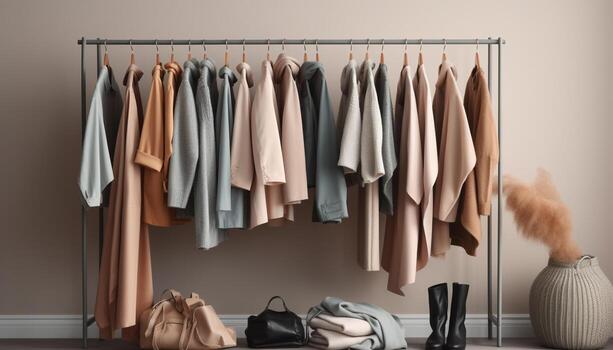
Standing in front of a complete closet and sensation like you have “nothing to put on” is one of fashion’s strangest paradoxes. It typically isn’t a scarcity of garments– it’s a shortage of clothes that actually work together. A capsule wardrobe solutions this by trading volume for comprehensibility: a smaller sized, very carefully picked set of pieces that mix and match right into even more clothing than their numbers suggest. This overview breaks down just how to in fact build one.
What a Pill Closet Truly Is
A capsule closet is a limited collection of clothes– commonly someplace in between 25 and 40 items, omitting loungewear and specialty items– selected to ensure that most pieces can be put on with the majority of various other items. The factor isn’t minimalism for its own purpose. It’s about eliminating the everyday rubbing of decision fatigue and ending up with a wardrobe where every little thing really obtains worn.
The Foundation
1. Neutral Base
A lot of capsule wardrobes are built around two or 3 neutral shades– assume navy, black, grey, camel, or white– that all couple with each other.by link https://verdict.reviewbay.workers.dev/reviews/hollandscountryclothingcouk website This is what makes high mix-and-match ratios feasible without every attire looking unintentional.
2. A Few Accent Pieces
Once the neutral foundation is established, a handful of accent colors or patterns add personality without frustrating the system. A single strong jacket or formed headscarf can revitalize multiple attires at the same time.
3. Versatile Shoes
Shoes are usually one of the most forgotten capsule category, yet they can make or damage an outfit’s adaptability. A well-chosen set of neutral sneakers, a set of boots, and one dressier option generally covers the vast bulk of situations.
| Group | Recommended Count | Notes |
|---|---|---|
| Tops | 8– 10 | Mix of fundamentals and one or two statement items |
| Bases | 4– 6 | At least 2 neutral, one versatile jeans alternative |
| Outerwear | 2– 3 | One structured, one laid-back, one weather-specific |
| Shoes | 3– 4 sets | Cover casual, official, and weather-resistant requirements |
| Dresses (optional) | 2– 3 | One flexible sufficient to spruce up or down |
| Accessories | As needed | Made use of to add selection without including bulk |
Exactly how to Develop Yours Step by Step
- Audit your current wardrobe. Try whatever on and sort right into keep, give away, and unsure heaps. Be sincere regarding what you in fact use versus what you stay out of sense of guilt.
- Identify your way of living needs. A capsule for a person that functions from home looks extremely different from one for a person in a client-facing role.
- Choose your color scheme. Pick a couple of neutrals as your base and 1 or 2 accent colors that flatter you and match your lifestyle.
- Fill the voids purposely. Instead of purchasing generally, make a specific checklist of what’s missing based upon your audit, and store versus that list just.
- Evaluate the combinations. A well-built capsule should let you produce a minimum of 15– 20 distinctive clothing from around 30 items.
Lasting Style and the Capsule Method
Pill closets normally align with more lasting purchasing routines, because getting fewer, better items decreases both costs and textile waste in time. Focusing on top quality building and construction and all-natural or sturdy fabrics tends to pay off, since capsule items are put on much more frequently than the typical product in an overstuffed wardrobe, and require to hold up to it.
Usual Errors to Prevent
- Choosing trend-driven items that will feel dated within a period.
- Picking colors that look good individually yet don’t in fact coordinate with each other.
- Neglecting your actual every day life and building a pill around an aspirational way of living instead.
- Dealing with the pill as permanent instead of something to be revitalized seasonally.
Last Ideas
A capsule wardrobe isn’t around possessing less for it– it has to do with seeing to it whatever you own makes its area. Succeeded, it turns getting clothed from a day-to-day decision into a fast, virtually automatic process, while still leaving plenty of area for individual design ahead through.